Trusted Food Safety Company
Commercial hygiene experts located in Brampton help maintain restaurants, food distribution facilities, baking enterprises, warehouses, and food service vehicles in compliance. They treat frequently handled areas, food prep surfaces, equipment, floors, drains, restrooms, and preparation zones using approved sanitizers, at proper strength, and using documented contact periods.
Main Points
- Brampton's sanitation technicians support restaurants, grocery departments, commissaries, warehouses, bakeries, schools, mobile vendors, and allergen-sensitive operations.
- Compartmentalized approaches clean frequently contacted areas, food-contact equipment, kitchens, floors, drains, restrooms, and storage areas for eliminating cross-contamination.
- Approved sanitizer dilution, suitability, and contact time are verified by qualified contractors, with completion recorded via samples, audits, and action records.
- Threat, throughput, transitions, spills, and requirements ought to inform hygiene calendars, with routine, weekly, and annual duties allocated by section.
- Suppliers need to possess hazard analysis knowledge, public-health competency, WHMIS preparation, protection, credentials, coded tools, and inspection-ready sanitation records.
Which Brampton Venues Need Food Safety Cleaning?
Food safety cleaning is mandatory for any Brampton facility that deals with, keeps, prepares, packages, or provides food. Apply it to your establishment if it comes under public health review, food regulations, or HACCP protocols. This includes restaurants, cafeterias, commissaries, grocery food departments, butcher shops, seafood counters, convenience stores, and institutional kitchens.
You also need proper hygiene cleaning in warehouses, food manufacturing plants, cold storage sites, retail bakeries, school nutrition programs, banquet halls, and meal delivery hubs. Mobile and temporary operations count too, including food trucks, event vendors, and temporary booths. If your staff process ingredients, portion ready-to-eat items, reheat products, or store allergens, your facility needs established sanitation documentation. In Brampton, sanitation isn't optional; it's part of regulatory, business, and safety compliance.
What Do Brampton Cleaning Experts Clean?
Your facility requires professional cleaners who disinfect frequently contacted surfaces, cooking and food prep areas, all floor types, and restrooms to maintain food safety compliance and public health standards. These zones receive attention because they represent the most significant contamination risk, hazardous walking conditions, and violations of hygiene standards.
If you comprehend their cleaning services, you'll successfully ensure your facility meets all operational and regulatory compliance needs.
Sterilizing High-Touch Zones
Skilled Brampton sanitization specialists know that high-touch surfaces demand sterilization since these areas hold bacteria, viruses, and food residue. You must have a documented schedule for sanitizing entry points, contact surfaces, control panels, railings, shared devices, registers, and cold storage handles. Applying area assessment techniques, teams determine every commonly touched area and establish cleaning frequency
swapping towels consistently, implementing sequential cleaning methods, and organizing sanitization equipment according to location. Doing so maintains your disinfection plan quantifiable, defensible, and audit-prepared consistently.
Cooking Zones, Walking Surfaces, and Restroom Environments
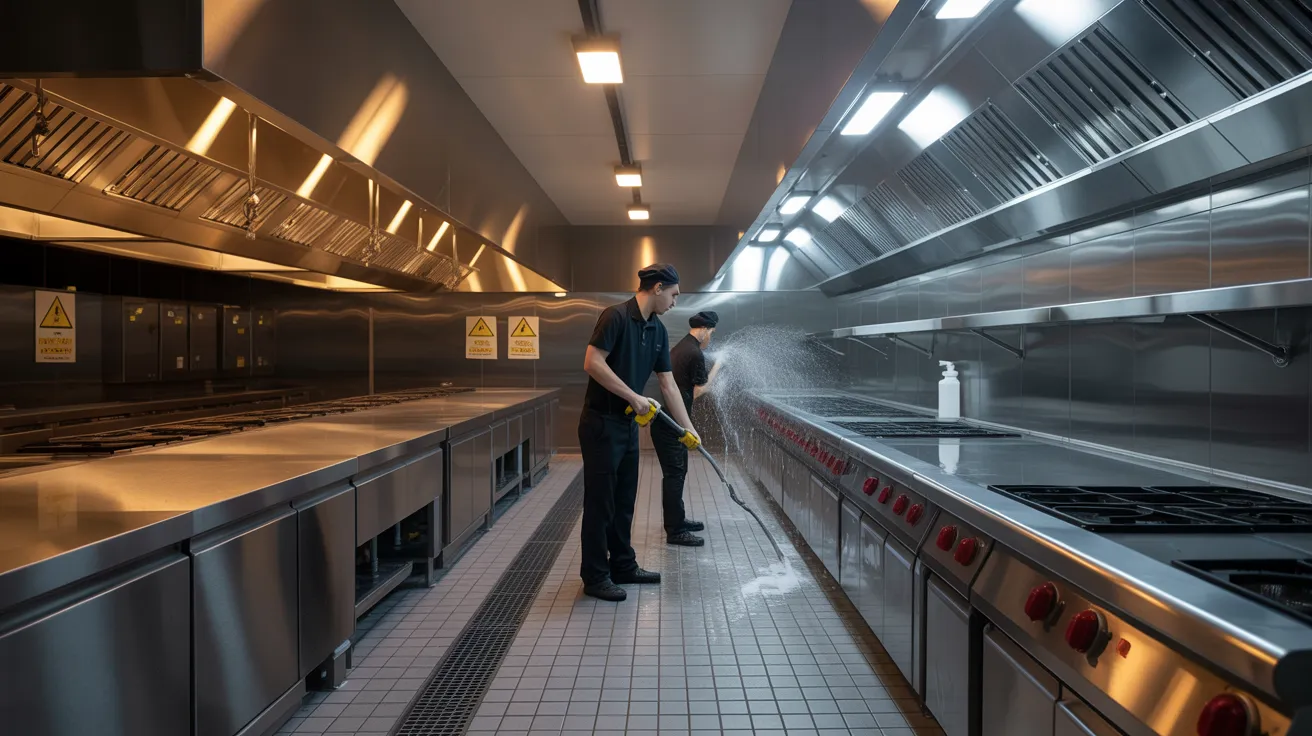
Brampton cleaning services zero in on kitchens, floors, and restrooms as each zone involves different food safety, accident, and wellness risks. In industrial kitchens, you need grease removal from cooking stations, appliance surfaces, drain systems, preparation areas, and backsplashes to reduce contamination and pest pressure.
Professional floor care with documentation is also included. is also provided as part of the service.
For restroom sanitation, cleaners sanitize high-touch surfaces, bathroom fixtures, stall dividers, supply dispensers, and trash receptacles, then replenish amenities and manage odor. They also service restaurant moprooms, where chemical storage, sink hygiene, and drainage conditions can affect sanitation compliance and staff safety daily.
Why Food Safety Cleaning Matters in Brampton
Brampton facilities demand proper hygiene standards to meet compliance obligations and pass audits. You also reduce bacterial spread through proper cleaning of food-preparation surfaces, appliances, and frequently-touched items. Most importantly, you safeguard public health by lowering the risk of foodborne illness in your facility.
Sanitary Standards Adherence
Food companies in Brampton face rigorous sanitary regulations, making food safety cleaning essential to meeting health code requirements, defending patrons, and avoiding enforcement action. You must maintain sanitized food contact points, recorded sanitation plans, correct sanitizer application, and documented employee protocols that meet municipal and provincial inspection expectations.
When inspectors examine your operation, they determine whether your sanitation system supports safe storage, tool sterilization, refuse management, and bathroom upkeep.
Cross-Contamination Avoidance
Maintaining health code standards copyrights on your power to stop cross-contamination during daily food handling and cleaning. You need to partition uncooked items from finished dishes, sanitize prep surfaces between tasks, and store chemicals away from food-contact items. Clear procedures reduce transfer risks and reinforce steady regulatory adherence.
Implementing allergen segregation helps keep priority allergens from contacting communal work zones, bins, or devices. Utilize separate boards, color-labeled items, and strict utensil labeling so staff don't mix items while preparing or distributing. Require handwashing after handling raw meat, seafood, eggs, or allergen-containing products. Refresh cleaning cloths often, and validate disinfectant levels using test strips. When your team learns these guidelines every shift, you establish a more hygienic, safer workplace that meets Brampton's food safety expectations regularly.
Community Health Protection
Should food safety cleaning collapse, you don't simply risk a failed inspection—you expand the odds of contamination-related sickness impacting customers, staff, and the wider Brampton community. You also weaken your role in protecting public health, especially in high-traffic food premises where pathogens travel quickly through surfaces, equipment, and touchpoints.
You depend on cleaning procedures that remove soils, effectively sanitize, and verify results. This entails adhering to exposure times, utilizing authorized sanitizers, recording schedules, and coaching staff to meet compliance standards. These actions support pathogen control by reducing microbes before affecting food surfaces or hands. In Brampton, robust sanitation protects at-risk groups, minimizes disease spread, and demonstrates accountability. When you maintain standards, you go beyond regulations—you substantially reduce risk and advance safer food handling throughout the city.
How Does Cleaning Support Food Safety Compliance?
Adopting rigorous cleaning routines reinforces food safety compliance by minimizing contamination hazards, controlling pathogen growth, and keeping your facility aligned with sanitation requirements under HACCP-based programs and public health regulations. You ensure that in-depth article product-contact areas appear visibly clean and microbiologically controlled, facilitating documented preventive controls and inspection readiness.
Systematic cleaning also enhances allergen mitigation by eliminating residues that can lead to undeclared allergen exposure. When you integrate established sanitation practices with compliance training, your staff can execute uniform procedures, handle approved chemicals properly, fill out documentation accurately, and address deviations prior to escalation occurs. Ongoing cleaning enables traceability, validates corrective steps, and shows due diligence in audits. Furthermore, it aids you preserve product quality, copyright operational adherence, and lower the risk of enforcement actions, mass recalls, customer complaints, and avoidable health hazards.
Determining When to Arrange Commercial Cleaning
You'll get the best results from cleaning plans that incorporate risk factors, production rates, and compliance obligations rather than a unchanging calendar system alone.
promotional events, catering services, or public functions need to plan cleaning prior to and following for successful event turnaround. Log timing, check completion, and adjust routines if hazards, volumes, or regulations change
What Should You Look For in Brampton Cleaning Experts?
Start by screening providers against food sanitation standards, not price alone. You should verify that each company understands CFIA, public health, and HACCP-aligned expectations relevant to your facility. Ask for insurance documentation, WHMIS compliance, documented staff training, and supervision practices. Review whether technicians understand contamination prevention, chemical handling, and traceable sanitation records.
Additionally, you need to evaluate service dependability and responsibility. Obtain references from Brampton food operations, then review response times, corrective-action procedures, and communication standards. Verify the company conducts supplier reviews and can deliver inspection-ready documentation when inspectors or external parties need proof. Verify equipment is maintained, color-coded equipment are applied correctly, and location-specific dangers are identified. A qualified provider protects compliance, product integrity, and your reputation.
Which elements are contained in a Food Safety Cleaning Plan?
Put together a written program that establishes every sanitation duty, standard, and accountability ahead of production commencement. You should specify cleaning intervals, permitted substances, dilution percentages, exposure times, instruments, and inspection methods for each sector, surface, and equipment. Add pre-operational inspections, corrective actions, and employee training requirements.
Your framework should also include cross-contamination controls, waste handling, pest-prevention measures, and documented schedules for bathrooms, drainage, ground surfaces, and food-handling zones. Specify how you'll distinguish raw from ready-to-eat operations, support ingredient tracking, and copyright accurate allergen labeling through validated cleaning between product changes. You should define accountability, maintain signed records, and check results against regulatory standards, HACCP controls, and customer requirements. When gaps appear, adjust procedures immediately and re-educate staff.
Commonly Asked Inquiries
Can sanitation providers accommodate overnight shifts in Brampton facilities?
If you run controlled spaces, you'll also need records that enable audits and maintain assurance.
Do Brampton cleaning experts offer emergency spill response solutions?
Yes, you can expect Brampton cleaning experts who provide hazard containment services. They manage hazardous materials, evaluate dangers, isolate affected areas, and begin swift cleanup to reduce exposure and prevent business interruption. You should confirm response times, training certifications, PPE protocols, and disposal procedures. If your facility must comply with industry standards, select a service that records events, maintains regulatory procedures, and enables compliance verification.
Do plant-based disinfectants perform safely on food preparation areas?
Definitely, eco-friendly disinfectants work safely on food-contact surfaces if you buy solutions certified for food use that adhere to regulatory requirements. You should check exposure duration, concentration levels, and rinse procedures in advance of use. Plant-derived products minimize toxic chemical contact, but you should obtain confirmation of performance against harmful bacteria. To preserve residue-free areas, stick to precise manufacturer instructions and ensure your cleaning agent meets food sanitation requirements.
Will sanitation programs adapt to seasonal shifts?
Absolutely, cleaning plans can be customized for seasonal variations. Modify frequencies, staffing, sanitizers, and verification steps to correspond to seasonal workflows while sustaining regulatory requirements. Lower production interruptions through timing sanitization amid production shifts, peak volumes, and usage patterns. Additionally update procedural documents, employee training, and environmental testing to reflect temporary risks, novel allergens, or higher contamination levels. Continuous reviews maintain the schedule current.
Are professional cleaning companies offering staff training on sanitation best practices?
Absolutely, commercial cleaners regularly deliver staff training on sanitation best practices. Your staff receives instruction on proper chemical use, contact times, contamination avoidance, equipment disassembly, and paperwork. They generally match guidance with HACCP, GMP, and CFIA or regional health authority standards. Many also perform health inspections to verify compliance, pinpoint weaknesses, and strengthen corrective measures. This enables you to sustain uniform standards, pass inspections, and lower contamination dangers routinely.
Final Thoughts
By collaborating with Brampton food safety and commercial cleaning experts, you aren't simply tidying—you maintain your facility inspection-ready and your practices in compliance. From production areas to kitchen zones, every sanitized surface and maintained corner reduces pest risk and prevents costly issues. By scheduling cleanings at appropriate intervals and adhering to a systematic cleaning protocol, you protect your team, customers, and your credibility. In a strictly regulated industry, clean spaces are mandatory—they're key to business compliance.